For ProfessionalsCare & development
Home Educator: Play, Creative Engagement, Holistic Development and Natural Exposure to English
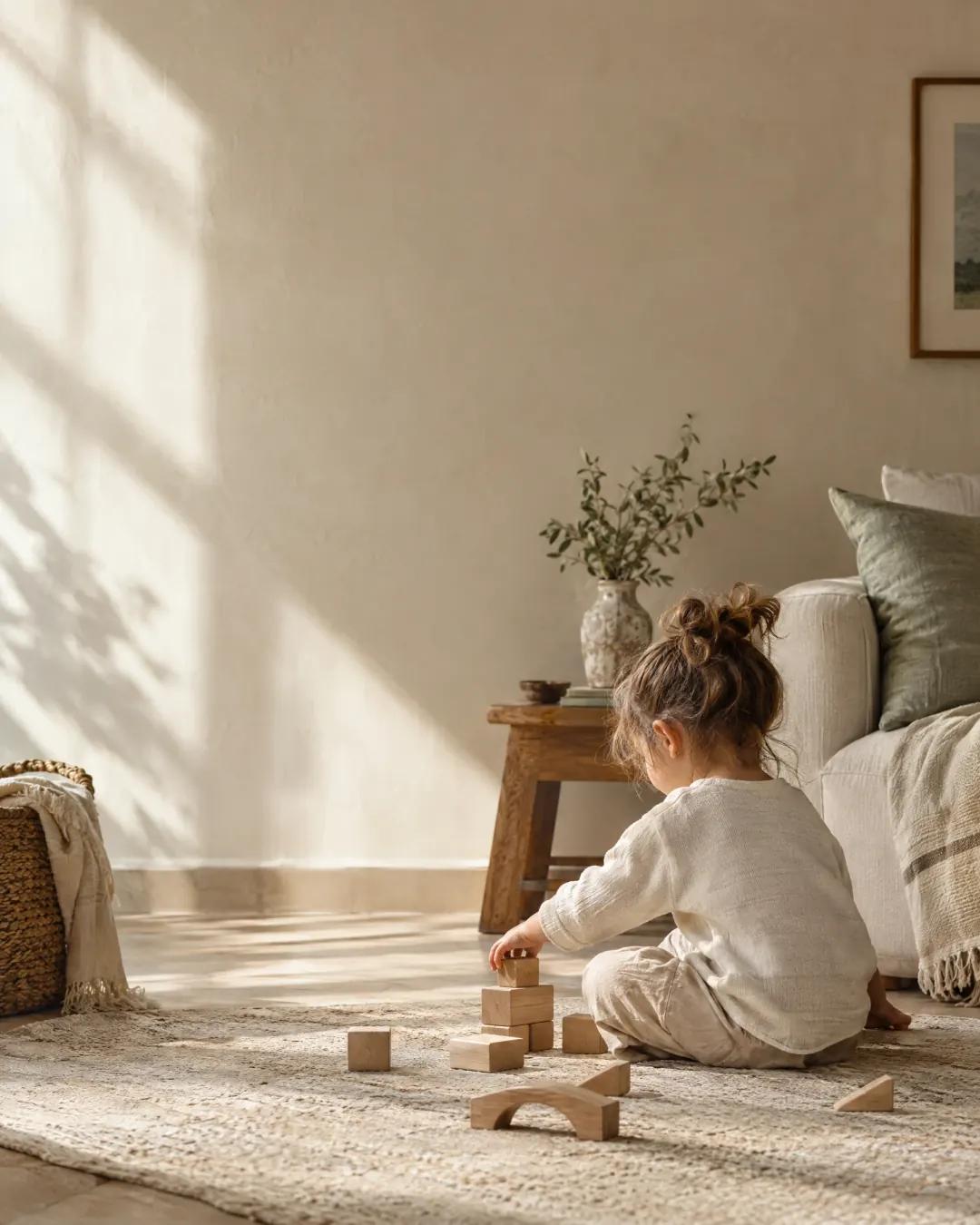
An educator working in a family home does not need to recreate a miniature classroom in the living room.
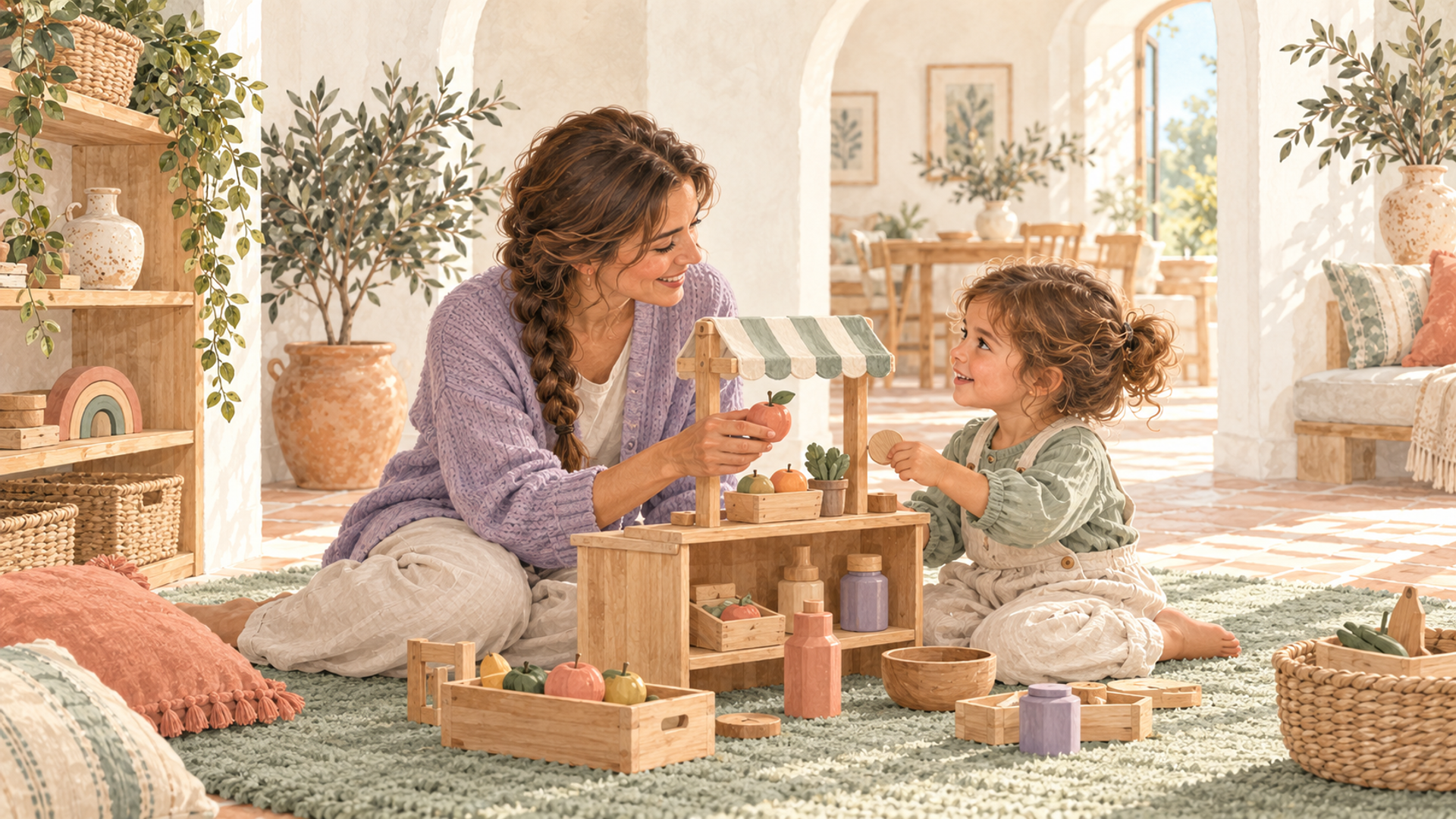
An educator working in a family home does not need to recreate a miniature classroom in the living room.
The value of the role often lies in the opposite approach: getting to know the child in their own environment, observing their personality, needs and interests, and creating everyday opportunities for play, communication, creativity, exploration and learning.
A home educator is not simply the person who keeps a child occupied while the parents work. They are a professional who can contribute meaningfully to the child’s holistic development in a way that respects the child’s age, personality, pace and individual needs.
This does not mean filling the day with “activities”. It means filling everyday life with meaningful interaction.
The importance of responsive interaction
Research on early development places particular importance on responsive interaction between children and adults.
Harvard’s Center on the Developing Child describes “serve and return” interaction as the natural back-and-forth that happens when a child shows interest, makes a sound, moves, gestures or asks a question and the adult responds.
UNICEF similarly places play and communication at the heart of responsive caregiving.
For a professional, this does not mean that every moment has to become an “educational activity”.
It means noticing the moments when the child is already interested and knowing how to extend them naturally.
A child shows the educator a toy. The educator responds.
The child asks a question. The educator listens and continues the conversation.
The child tries to build something and struggles. The educator does not necessarily step in and do it for them, but can encourage them to try again.
These small moments are an important part of the everyday educational relationship.
Start with the child, not the activity
One child may love books, another crafts, another pretend play or movement.
An educator does not need to begin with a rigid activity schedule. It is often more useful to observe:
- what the child chooses independently,
- what makes them smile and participate,
- how long they can stay engaged,
- when they need a change of pace or a break,
- how they express joy, excitement, frustration or difficulty,
- how they communicate needs and wishes,
- what helps them feel secure and trusting.
Those observations can shape a much more meaningful framework for creative engagement.
Play is a fundamental part of development
Play is not simply a pleasant way to pass the time.
Through play, children can explore, test ideas, communicate, cooperate, develop imagination and express emotions.
A cardboard box can become a house, a shop or a spaceship. A book can lead to drawing, storytelling or pretend play. Cooking can create opportunities for conversation, counting and cooperation. Even tidying can become a sorting game.
Activities do not need to be complex or impressive.
What matters is giving the child room to participate, choose, experiment, make mistakes and try again.
Free play and guided activities can coexist. The educator can follow the child’s initiative while also introducing new ideas when they see an opportunity for the child to explore something different.
Creative engagement with meaningful content
Creative engagement does not need to mean an endless schedule of crafts and activities.
It may include:
- drawing and crafts,
- music and songs,
- stories and storytelling,
- pretend play,
- puzzles and board games,
- construction and building,
- movement-based activities,
- play in the garden or park,
- cooking and simple everyday tasks,
- activities connected to nature and exploration,
- inventing stories and imaginative play.
What matters is not how many activities were completed during the day.
It is how the child participated and what the experience offered them.
Holistic development is not only about learning
When we talk about a child’s development, we are not only talking about knowledge and academic skills.
An educator can support different areas of development through everyday life:
Cognitive development: through questions, stories, thinking games, construction, observation and exploration.
Language development: through conversation, storytelling, books, songs and everyday communication.
Physical and motor development: through movement, play, dance, fine-motor activities and outdoor play.
Social development: through cooperation, pretend play, sharing, turn-taking and communication with others.
Emotional development: through recognising and expressing feelings, encouragement, consistency and building a relationship of trust.
These areas do not develop in isolation. A simple activity can often involve several of them at the same time.
The educator also needs to notice the feeling behind the behaviour
A child may become angry because they could not finish a construction. They may refuse to join an activity because they are tired. They may struggle with separation from a parent or respond strongly to a change in routine.
The educator’s role is not simply to “correct” the behaviour.
It is to try to understand what may be behind it and help the child recognise and express what they are feeling in an age-appropriate way.
This does not mean there are no boundaries.
Children need clear, consistent boundaries, but they also need an adult who can apply them calmly, respectfully and predictably.
A sense of security is not created only by the schedule. It is also created by the relationship.
Trust is part of the educational process
A child does not need to feel comfortable with a new educator from the first day.
They need time to get to know the person who will be with them, understand what to expect and build their own relationship with them.
The educator can support this process through consistency, active listening, play and genuine presence.
A child who feels heard and respected is more likely to express themselves, explore and take part.
What if the family wants English?
English can become an additional element of creative and educational engagement when this is a need or preference of the family.
Depending on the child’s age, previous exposure and the family’s goals, English can be introduced naturally through books, songs, play, everyday phrases and activities.
For example, a building game can include simple English phrases, a story can be read in English or an English song can become part of an everyday routine.
English does not need to turn every moment into a lesson.
The language can function as a natural medium for communication and play when this suits the child and the agreement with the family.
When the family is looking for a native English-speaking educator
There is an important difference when the family specifically wants a native English-speaking educator and the use of English is a core part of the role.
In that case, English is not simply an extra element occasionally added to creative activities. It may be the main language used for everyday communication and interaction with the child, depending on what has been agreed with the family.
Play, books, activities, everyday routines, conversations and outings can happen in English, creating a natural environment of language exposure.
Even then, the goal is not to turn the home into an English classroom.
A native English-speaking educator can use the language within the relationship, play and everyday life so that the child encounters it in real and meaningful situations.
The approach should be agreed with the family and adapted to the child’s age, previous exposure to English, level of understanding and individual response.
Agree with the family how the language will be used
Before the role begins, it is useful to discuss practical choices:
- Does the family want English throughout the session or only at selected times?
- Are they specifically looking for a native English-speaking educator who will use English every day?
- Do they prefer books and play or more structured activities?
- Is the child already exposed to English at school or elsewhere?
- How does the child respond when they hear or use English?
- How will the family be updated about what seems to interest the child?
There is no need to present one method as the only correct approach.
The aim is for the approach to be understandable, consistent and aligned with the family’s goals and the child’s needs.
Observation is part of the job
An educator does not need to “measure” the child every day or turn each activity into an assessment.
But they can observe.
Which story did the child ask to hear again? Which activity engaged them most? What new thing did they try? How did they react when something did not go their way? When did they show more confidence? What seems to interest them at this stage?
These small observations help the educator adapt everyday life to the child’s real needs.
They can also be shared with parents in a simple and useful way, without rushing to conclusions.
There is an important difference between saying “today they chose to read the same book again” and saying “their language skills have now improved significantly”.
The first is a real observation. The second is already an interpretation.
Keep the role clear
Educational and creative engagement can coexist with everyday childcare, but everyone needs to understand what has been agreed.
If the family also expects school pick-ups, meal preparation, accompanying children to activities or other tasks, the professional needs to know which responsibilities have priority and what is realistic within the available time.
Clarity helps the educator provide quality care and meaningful creative engagement without different expectations developing on each side.
The educator does not need to do more. They need to do the right things.
Meaningful educational practice is not measured by the number of crafts completed in a week or the number of “educational” activities ticked off.
It can be seen in the small everyday moments:
- a child who felt heard,
- a feeling they managed to express,
- a game that gave them room to imagine,
- a difficulty they approached with greater confidence,
- a new idea they wanted to explore,
- a conversation that made them think,
- a relationship of trust that began to grow.
The home educator has the opportunity to be close to these moments and use them with knowledge, sensitivity and professionalism.
Ultimately, meaningful educational care is not about filling every hour with activities.
It is about creating an environment where the child can play, learn, express themselves, feel secure, develop skills and gradually become more independent at their own pace.
If you are an educator or a native English-speaking educator looking for a family role, you can present your experience, availability and educational approach through a general Nannies & Edu Care professional application and explore the jobs page when suitable openings are available.
FAQ
Does every game need a learning objective?
No. Free play has value in its own right. An educator can support communication, imagination and exploration without turning every moment into a lesson.
What is the educator’s role in emotional development?
An educator can provide a stable, supportive environment where the child has space to express feelings, communicate needs and gradually learn to handle different situations. They do not replace the parent or a mental-health professional, but they can be an important adult in the child’s everyday life.
Does an educator need to speak English?
No. English is relevant when it is requested by the family and fits the child’s needs and the agreed role.
When a family specifically wants a native English-speaking educator, English may become a central part of everyday communication, play and creative engagement, according to what has been agreed.
How does an educator know whether an activity suits a child?
By observing the child’s participation, interest, mood and response. There is no single activity that suits every child. A strong educational approach adapts to the individual child.
What should the educator report back to parents?
Short, specific observations about mood, interests, participation, activities and important events are usually more useful than premature assessments of the child’s “progress”.