How We Choose the Right Childcare and Education Professional for Each Family
What we look at before we introduce anyone to a family, what we always verify, and why the best childcare and education professional is not the same person for everyone.

Every family is different. And with each family, every child has different needs. That is why there is no one “ideal” professional for every family. There is the right professional for the particular child, the particular family, and the particular stage of their lives.
This is what we try to understand from our very first conversation: not simply who has the right qualifications, but which person can genuinely fit into a family’s everyday life and build a relationship that has consistency, meaning, and lasting value.
We Start with the Family
Before we look for a professional, we first want to get to know the family.
We want to understand what their everyday life looks like, what they truly need, what has worked in the past, and what has not.
How old are the children? What does a typical day look like? At what times is support genuinely needed? What role do the parents play in the daily routine? Are there specific habits or boundaries that are important to maintain?
We also ask about the small details that may seem insignificant but can make a real difference in practice.
We want to know whether the family needs someone who will take initiative or someone who will consistently follow a specific routine. Whether the child is more sociable or needs time to open up. Whether there are siblings, grandparents, or other people who are involved in the child’s everyday life.
Because very often, the success of a collaboration lies precisely in these details.
We Don’t Look Only at Experience. We Look at the Person.
A CV can show us someone’s education, years of experience, and previous positions. But it cannot, on its own, show us how a person relates to a child.
That is why, when evaluating each candidate, we look at their professional profile as a whole:
- their experience with the relevant age group and the child’s specific needs,
- the length and stability of their previous collaborations,
- their education and professional training,
- any additional knowledge and certifications, such as first-aid training,
- references from previous families,
- as well as the way they communicate, collaborate, and understand their role.
Something else is particularly important to us — something that is not easily captured in a CV: their attitude towards the child.
Respect, patience, consistency, discretion, and a genuine willingness to provide meaningful care are qualities we look for in every collaboration.
Evaluation Before Every Recommendation
Every professional we recommend to a family has previously gone through our own evaluation process.
The process includes a personal meeting, either in person or via video call, a discussion around real-life situations and everyday circumstances, a review of the CV and the information provided to us, as well as contact with previous references, where available.
At the same time, we discuss the expectations and conditions of each collaboration clearly: the schedule, responsibilities, the boundaries of the role, and the way communication with the family will work.
We believe that the right collaboration begins with clear expectations on both sides.
And if a candidate does not give us the level of confidence we need at this stage, we prefer to continue the search.
For us, the quality of a recommendation is more important than speed.
The First Meeting with the Child
The first meeting is a special moment.
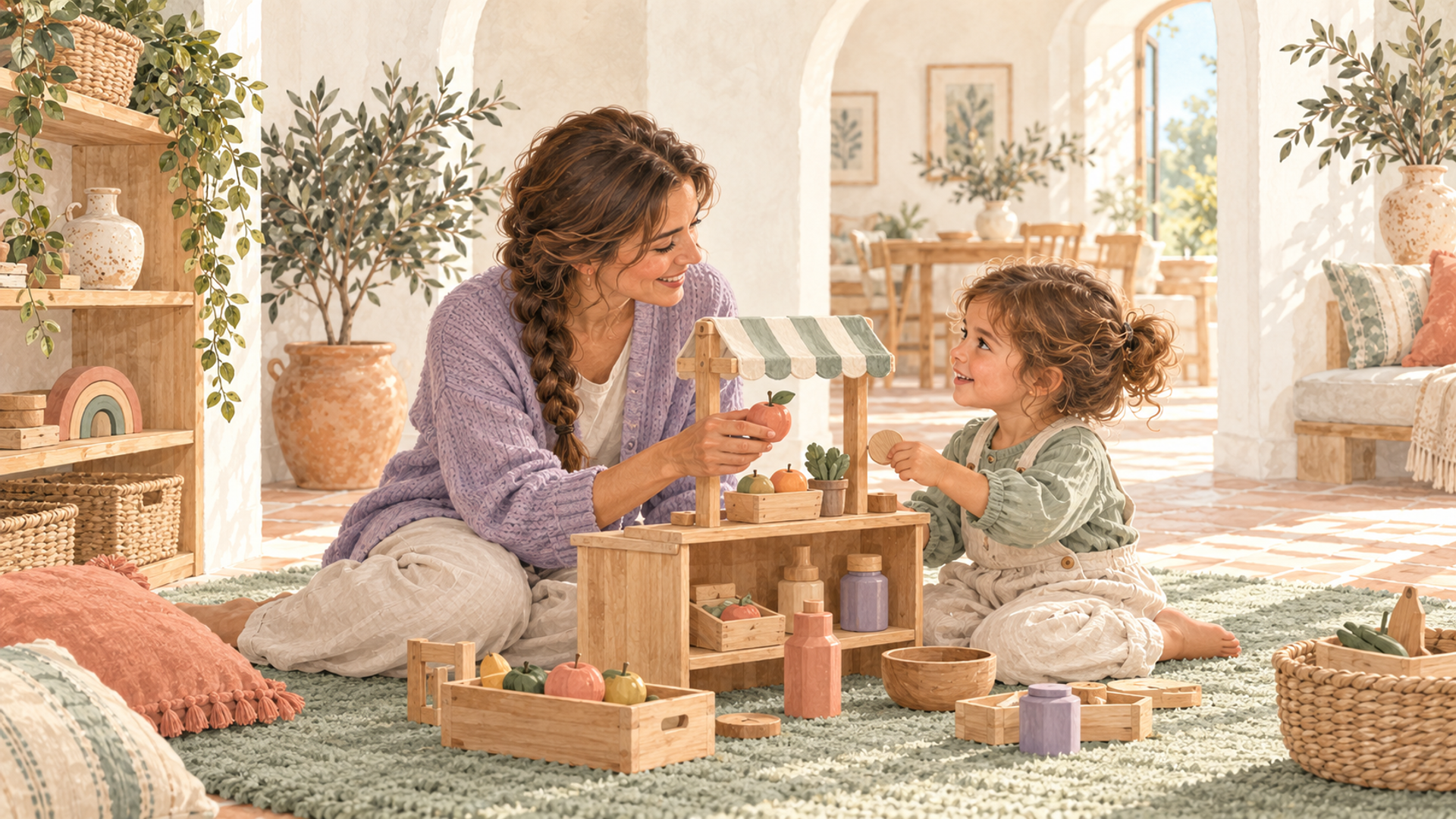
It is not an interview. It is not a test. It is the first opportunity for two people to meet who may potentially share an important part of everyday life.
That is why, whenever possible, the meeting takes place in the presence of the child.
It may be a simple conversation, a game, a drawing, or a small activity. Nothing impressive needs to happen.
What matters is observing how the professional communicates with the child and, above all, how the child responds to their presence.
Some children open up immediately. Others need time.
Both are completely natural.
A relationship of trust is not always created from the very first moment. It is built gradually, through consistency, care, and a sense of security.
Asking the Right Questions During the Meeting
A first meeting can give us valuable information, especially when the questions are specific.
Instead of asking general questions, we can ask the professional to describe how they would handle real-life situations:
- How would you organise the day with two children of different ages?
- What does creative engagement and creative play mean to you?
- How would you handle a child who finds it difficult to separate from their parent?
- How would you respond to a child who is not yet able to regulate their emotions?
- What would you do if a child did not want to participate in an everyday activity?
- How would you inform the family if something concerned you?
- In which situations would you take the initiative, and when would you first ask for the parents’ opinion?
The answers do not always have a “right” or “wrong” answer.
What matters is determining whether the two sides’ way of thinking, communication style, and expectations can come together.
When the Collaboration Begins
The first meeting is only the beginning.
The meaningful relationship is built through everyday life: during the first morning, the first meal, playtime, a walk, a difficult moment, a hug, and also through the small daily routines that create a sense of security for the child.
It takes time for a child to feel comfortable with a new person. And it also takes time for the professional to truly get to know the child — their personality, their needs, and their own way of communicating.
The adjustment is a process that requires patience, stability, and consistency.
What If the Match We Expected Does Not Ultimately Work?
Even when a choice has been made carefully, there are times when a collaboration does not develop as initially expected.
A family’s needs change. A child grows. The schedule evolves. Or two people may simply realise that, despite the good intentions on both sides, the right match is not there.
This does not necessarily mean that someone did something wrong.
What matters is having honest communication and looking for the solution that best serves the child and the family.
For us, our relationship with the family does not end when a recommendation is made.
We remain available, listen to how the collaboration is progressing, and, when needed, reassess the family’s needs so that we can provide meaningful support in the next step as well.
Because, Ultimately, Everything Begins with Trust
Choosing the person who will be by your child’s side is a decision that requires thought, care, and trust.
You are not simply looking for someone to cover certain hours of the day.
You are looking for someone who will become part of your everyday life, get to know your child, and become a stable and important presence in their life.
And that is why our approach always begins with the person, continues with the family, and ultimately leads to the child.
Because the goal is not simply to find a professional with the right qualifications.
Our goal is to find the person who can build a relationship of trust, security, and meaningful care and education with your family.